


Siddharth Sinha, St Cross and the ideas behind Smarter Than the Storm
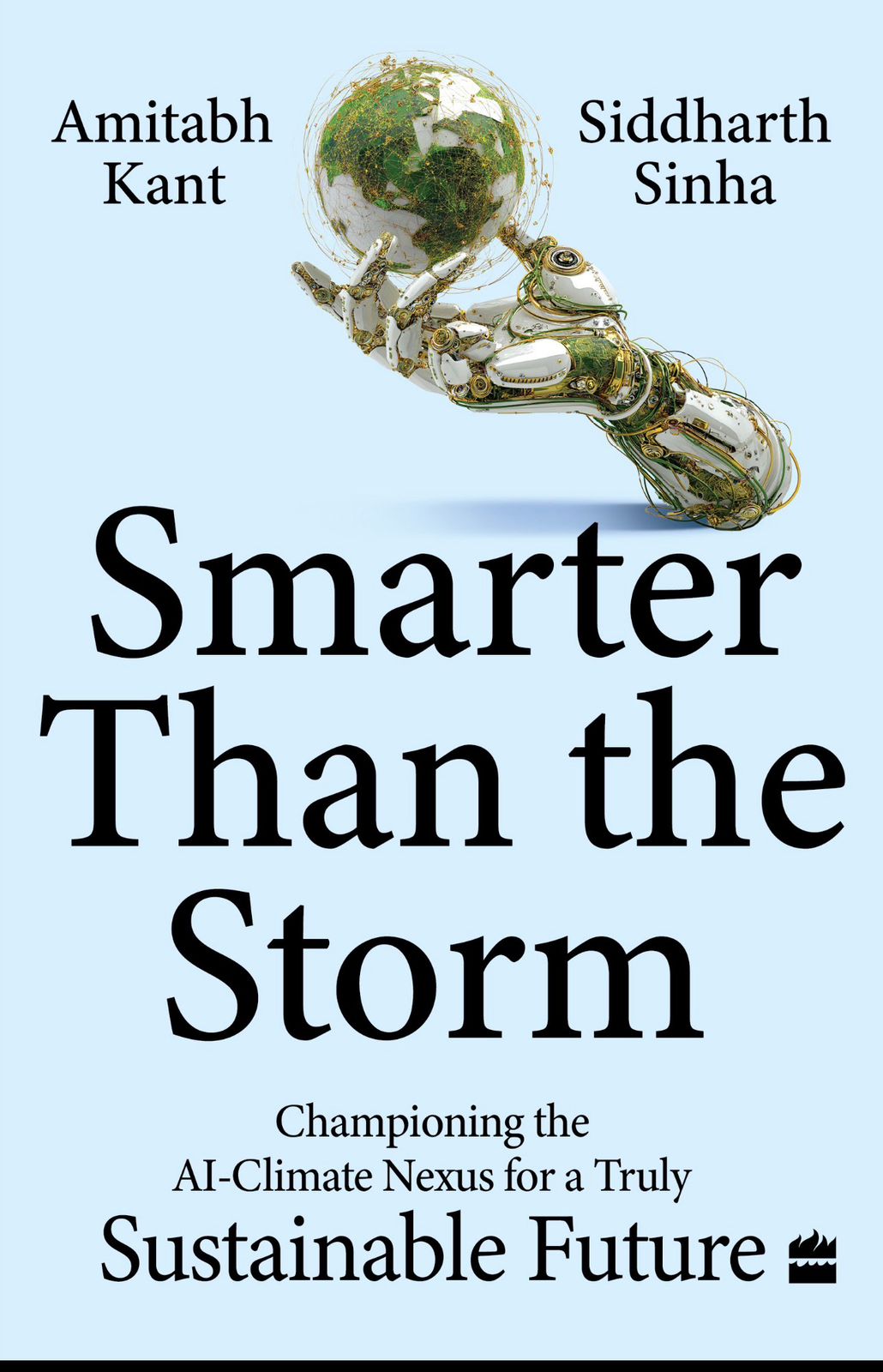
Former Chevening CRISP Fellow Siddharth Sinha (2025 cohort) recently published Smarter Than the Storm, co-authored with Amitabh Kant, examining the relationship between climate change and artificial intelligence through the connected worlds of policy, infrastructure and innovation. Sinha began developing the book during his time in Oxford as part of the Chevening Research, Innovation and Science Policy (CRISP) Fellowship, hosted at St Cross College.
Sinha met with St Cross staff to discuss his experiences, describing a professional path that has moved across engineering, consulting, climate and energy work, and international policy. Trained as an electrical engineer, he began his career in management consulting before shifting more fully into climate-related work. He also reflected on mountaineering in the Himalayas, where repeated visits gave him a direct sense of environmental change and its local effects.
That breadth of experience shapes the argument of Smarter Than the Storm. Rather than treating climate change as a single issue, Sinha presents it as something that intersects with health, conflict, energy systems and economic instability. Artificial intelligence, in his account, is part of that same picture: a technology that may help address climate-related challenges, while also generating pressures of its own through energy use, water consumption and infrastructure demands.
Among the subjects he identifies as especially urgent is the question of critical minerals. These resources are central both to AI systems and to the wider energy transition, yet their extraction and supply are often tied to regions already exposed to climate risk. In the book, this becomes part of a wider argument that climate vulnerability, technological development and geopolitical pressure cannot be understood in isolation from one another.
Sinha also emphasises the importance of collaboration across fields. “No single stakeholder can solve the climate challenge,” he says, reflecting a view that runs throughout the book. Written for a broad readership, Smarter Than the Storm aims to bring complex and often separate debates into a single frame.
His time in Oxford, and particularly at St Cross, provided an important setting for that work. Sinha speaks warmly of the CRISP Fellowship as a programme that gave participants room to define their own direction, and of St Cross as a setting whose international and interdisciplinary character encouraged discussion across professional and academic boundaries. Those conversations, he suggests, helped sharpen the thinking behind the book.
Sinha will return to Oxford on the 18th of June to officially launch the book, with further details to be announced in due course.

